
Application & Advantages of electromagnetic vibration feeder
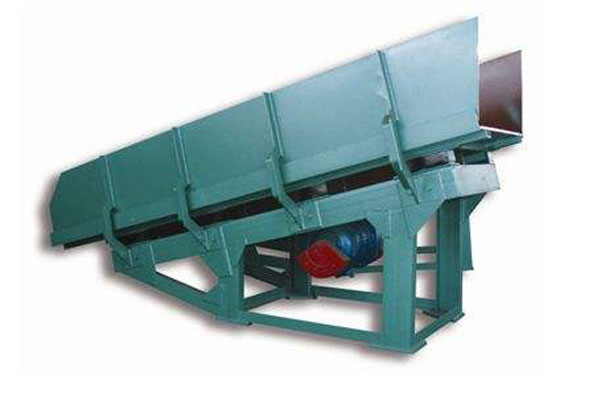
An electromagnetic vibrating feeder is an efficient material handling device designed to feed bulk, granular, and powdery materials uniformly, continuously, or quantitatively.
It is commonly used to transfer materials from storage bins, hoppers, or other storage equipment to downstream processing machines. With stable vibration and precise feeding control, electromagnetic vibrating feeders help improve production efficiency and support automated material handling systems.
What Is an Electromagnetic Vibrating Feeder?
An electromagnetic vibrating feeder uses electromagnetic excitation to generate controlled vibration. This vibration moves materials forward along the feeder trough in a stable and continuous manner.
Unlike conventional feeding equipment that relies on rotating mechanical components, an electromagnetic vibrating feeder has a relatively simple structure. The feeding rate can also be adjusted according to production requirements, making it suitable for continuous feeding, quantitative feeding, and automatic batching applications.
Depending on the application, the feeder can handle a wide range of materials, including bulk solids, granules, powders, and other dry materials.
How Does an Electromagnetic Vibrating Feeder Work?
The working principle is based on electromagnetic vibration. When the electromagnetic system is energized, it generates controlled vibration that causes the feeder trough to oscillate at a high frequency.
The vibration moves the material forward in small and continuous movements. By adjusting the vibration intensity, the feeding capacity can be controlled to meet different production requirements.
This operating principle allows the equipment to provide stable and uniform material flow while reducing the need for complex mechanical transmission systems.
Key Advantages of Electromagnetic Vibrating Feeders
- Uniform Material Feeding: Provides stable and continuous material flow to downstream equipment.
- Precise Feeding Control: Suitable for quantitative feeding, automatic batching, and automated production processes.
- Compact Structure: The small footprint makes installation easier, especially in limited production spaces.
- Low Power Consumption: Electromagnetic vibration systems can operate efficiently with relatively low energy consumption.
- Low Noise: The equipment is designed to provide stable operation with reduced operating noise.
- No Rotating Parts: The simple structure reduces mechanical wear and eliminates the need for many conventional transmission components.
- No Lubrication Required: Fewer moving components help reduce lubrication requirements and simplify maintenance.
- Easy Installation and Maintenance: The compact and lightweight design makes installation, inspection, and maintenance more convenient.
Electromagnetic Vibrating Feeders in Crushing Systems
In mining, quarrying, and aggregate processing plants, stable material feeding is essential for maintaining efficient crushing operations. An electromagnetic vibrating feeder can deliver materials from a storage hopper to downstream crushing equipment at a controlled and consistent rate.
This helps prevent sudden material surges and supports smoother operation throughout the crushing line. Depending on the material and production process, the feeder can work together with crushers, screening equipment, and conveying systems to create an efficient material processing solution.
Working with a Cone Crusher
A Cone Crusher is widely used for secondary and tertiary crushing in mining, quarrying, and aggregate production. It crushes materials through the continuous movement of a mantle against a concave crushing surface, reducing hard and medium-hard materials into smaller and more uniform sizes.
When used as part of a complete crushing system, an electromagnetic vibrating feeder can help provide a stable and controlled material flow to upstream or downstream equipment connected with a Cone Crusher. Consistent feeding is important for maintaining efficient crushing performance, reducing unnecessary fluctuations, and supporting stable product quality.
Cone Crushers are commonly used for processing materials such as granite, basalt, limestone, iron ore, and other hard rocks. Their high crushing efficiency, reliable operation, and ability to produce well-shaped aggregates make them an important part of many modern crushing and screening plants.
Applications of Electromagnetic Vibrating Feeders
Thanks to their flexible feeding capabilities, electromagnetic vibrating feeders are widely used across many industries.
Mining and Metallurgy -- Used for feeding ores, minerals, crushed materials, powders, and other raw materials to crushers, screens, mills, and processing equipment.
Coal Processing -- Helps provide stable and controlled feeding of coal and related bulk materials during processing and handling operations.
Building Materials -- Suitable for feeding materials such as sand, aggregates, cement, limestone, and other construction materials.
Chemical Industry -- Can be used for the controlled feeding of granular and powder materials in chemical processing systems.
Power Industry -- Supports automated material handling and feeding processes in various power generation and processing applications.
Food Processing -- Suitable feeder configurations can be used for handling granular and powdery food materials where controlled and consistent feeding is required.
Supporting Automated Production Systems
Modern production lines increasingly require stable and precise material feeding. An electromagnetic vibrating feeder can play an important role in connecting storage equipment with downstream processing machines.
It can be used in automatic batching systems, quantitative packaging lines, crushing plants, and other automated material handling processes. By maintaining a consistent material flow, the feeder helps improve production efficiency and supports more reliable process control.
The feeding capacity can also be adjusted according to the requirements of different production stages, providing greater flexibility for manufacturers.
Conclusion
An electromagnetic vibrating feeder provides an efficient and reliable solution for handling bulk, granular, and powdery materials. With advantages such as uniform feeding, compact size, low power consumption, simple installation, and convenient maintenance, it has become an important piece of equipment in many industrial applications.
In mining and aggregate processing plants, electromagnetic vibrating feeders can also work as part of an integrated material handling system with crushing equipment such as Cone Crushers, vibrating screens, and conveyors. Together, these machines help create a more stable and efficient production process.
Whether used for mining, metallurgy, building materials, chemicals, food processing, or automated production systems, electromagnetic vibrating feeders can help deliver stable and controlled material flow.